Earnest Money: What It Protects, What It Risks, and When You Lose It
Discover the ins and outs of earnest money: what it protects, risks involved, and when you might lose it. Get the facts and expert advice here. Don't miss out!

Earnest money is a deposit a buyer makes after entering into a purchase agreement. It is typically held by the escrow holder, title company, brokerage, attorney, or another party designated in the contract until the transaction closes or the agreement is terminated.
The deposit shows the seller that the buyer is financially committed to completing the transaction. If the purchase closes, the money is generally credited toward the buyer's amount due at closing.
The more important question is what happens when the transaction does not close.
Whether the buyer receives the deposit back depends on the purchase agreement, the reason for termination, applicable deadlines, and state law. The release process matters too. Even when one party believes the contract clearly gives them the money, the escrow holder may not be able to release it until the required paperwork or dispute-resolution process is completed.
What Earnest Money Actually Is
An earnest money deposit accompanies a real estate purchase agreement and demonstrates the buyer's intent to complete the transaction.
It may also be described as a good faith deposit. The terminology varies, but the basic purpose is similar.
From the seller's perspective, accepting an offer can mean removing the property from active competition while the buyer completes inspections, financing, appraisal, and other due diligence.
If the buyer later defaults outside the protections of the contract, the earnest money may be exposed to a seller claim, subject to the remedies and procedures contained in the agreement.
Earnest Money vs. Down Payment
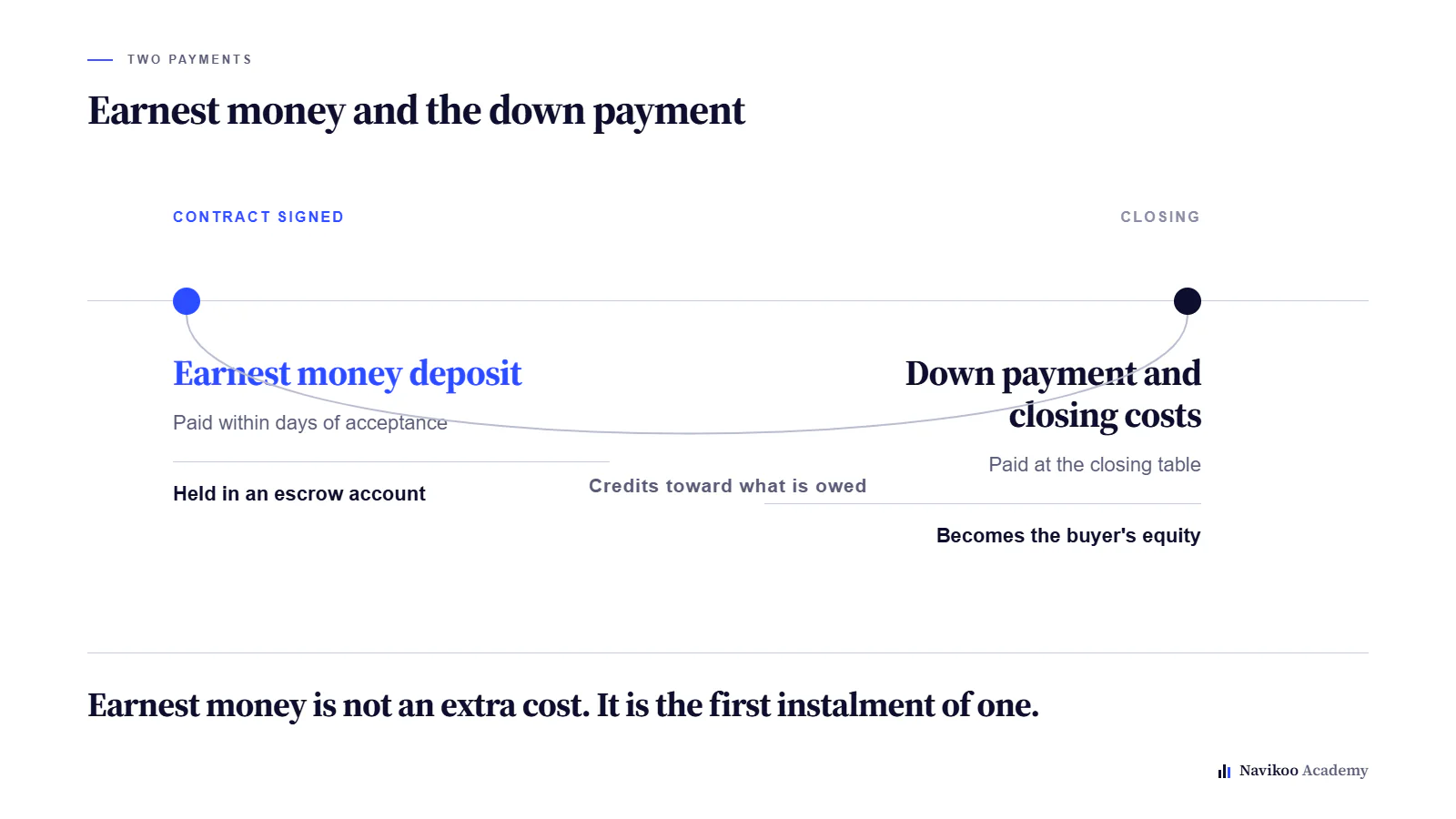
Earnest money and the down payment are related but serve different purposes.
The down payment is the portion of the purchase price the buyer contributes as equity at closing.
Earnest money is typically deposited earlier, after the purchase agreement is signed, and held pending the outcome of the transaction.
If the purchase closes, the earnest money is generally credited toward the buyer's cash-to-close amount.
For example, if a buyer ultimately needs $80,000 of cash at closing and already deposited $10,000 in earnest money, that deposit usually reduces the remaining amount that must be brought to closing.
How Much Is Earnest Money on a $400,000 House?
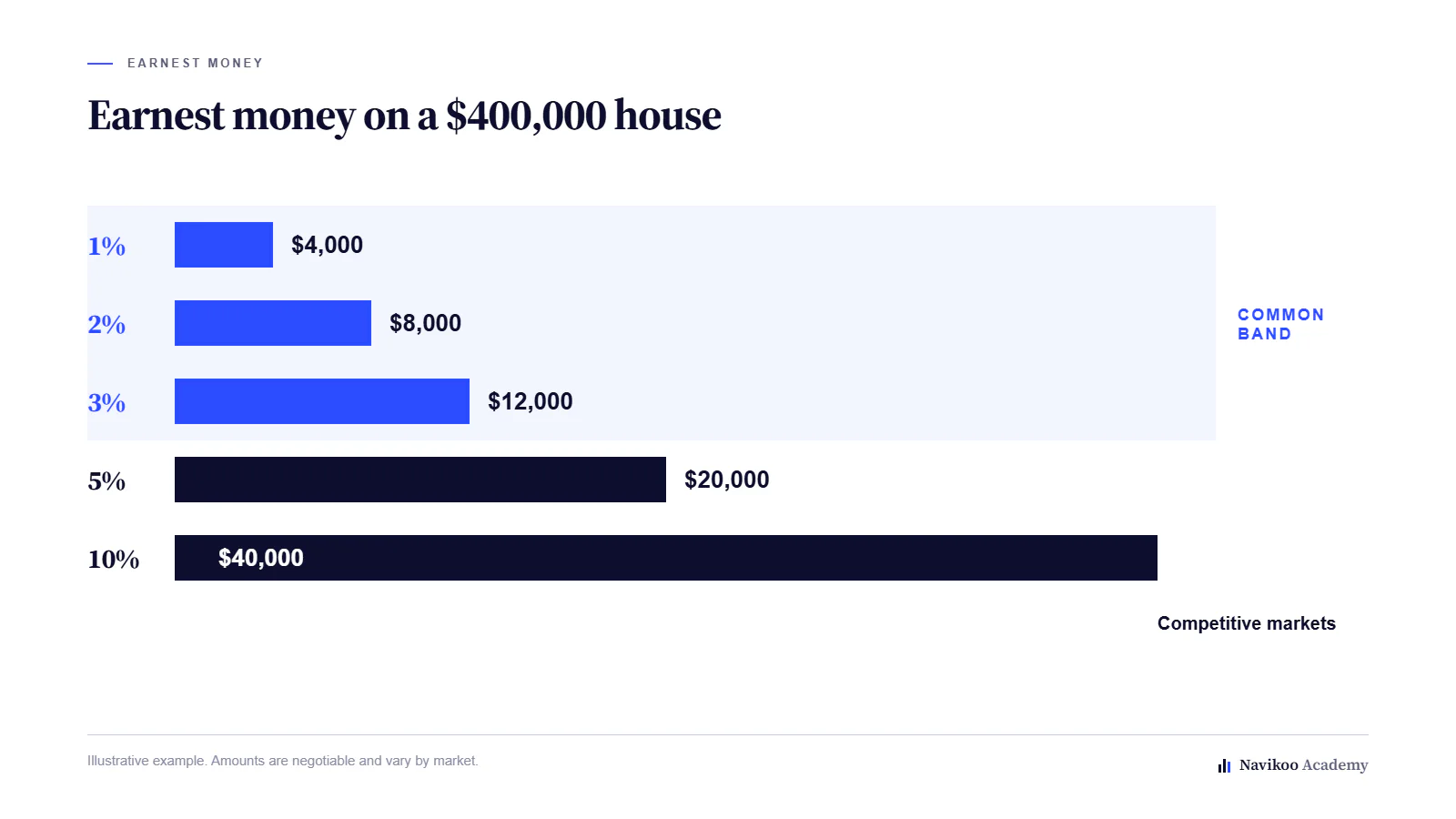
Earnest money is negotiable and often expressed as a percentage of the purchase price.
On a $400,000 property:
Percentage | Earnest Money Amount |
|---|---|
1% | $4,000 |
2% | $8,000 |
3% | $12,000 |
5% | $20,000 |
10% | $40,000 |
Deposits in the 1% to 3% range are commonly discussed, while larger deposits may appear in competitive transactions. Zillow notes that deposits can reach as high as 10% in some situations.
Local customs and contract practices vary considerably, so the percentage should not be treated as a national rule.
What Sets the Number
Several factors influence the size of an earnest money deposit.
Market competition.
A buyer may offer a larger deposit to signal greater commitment when several purchasers are competing for the same property.
Property demand.
A seller may value a stronger deposit differently depending on how quickly the property is likely to attract another buyer if the deal fails.
Offer structure.
An offer containing additional contingencies or conditions may create more uncertainty for the seller, while a larger deposit can sometimes make the overall package more attractive.
Buyer liquidity.
A larger deposit may strengthen an offer, but it also ties up more cash and can increase the amount exposed if the buyer later defaults.
The right deposit is therefore not simply the largest amount a seller might accept. It should also reflect how much capital the buyer can reasonably commit while the transaction remains unresolved.
Where Earnest Money Goes
Earnest money is typically delivered to the party designated in the purchase contract rather than simply being handed directly to the seller.
Depending on the state and transaction, that party might be:
a title company
an escrow company
a real estate brokerage
an attorney
another authorized escrow holder
The purchase agreement should identify who receives the funds and how they will be handled.
The Escrow Account
The deposit is generally held under the terms of the contract and applicable state rules until the transaction closes or the funds become eligible for release.
The Consumer Financial Protection Bureau's overview of escrow explains the broader concept of funds being held by a third party until specified conditions are met.
The release procedure can become important when a transaction falls apart.
If the buyer and seller agree about who should receive the deposit, they may sign the required release documentation.
If they disagree, the escrow holder generally must follow the procedure required by the contract and applicable law rather than simply deciding which side has the stronger argument.
Whether the money earns interest depends on the escrow arrangement and applicable rules. Buyers should generally treat the deposit as committed transaction cash rather than capital available for another purpose.
When Earnest Money Is Due
The purchase agreement specifies when the earnest money must be delivered.
The deadline may be only a few days after acceptance, but there is no single national timeline.
A buyer should identify the exact deadline immediately after the agreement is executed because missing it can create a contractual problem before inspections or financing even begin.
Buyers using gifted funds or money being transferred between accounts should plan ahead as well, particularly when the lender needs documentation showing where the funds came from.
Can Earnest Money Be Applied to the Down Payment?
Yes. In a completed transaction, earnest money is generally credited toward the buyer's required cash at closing.
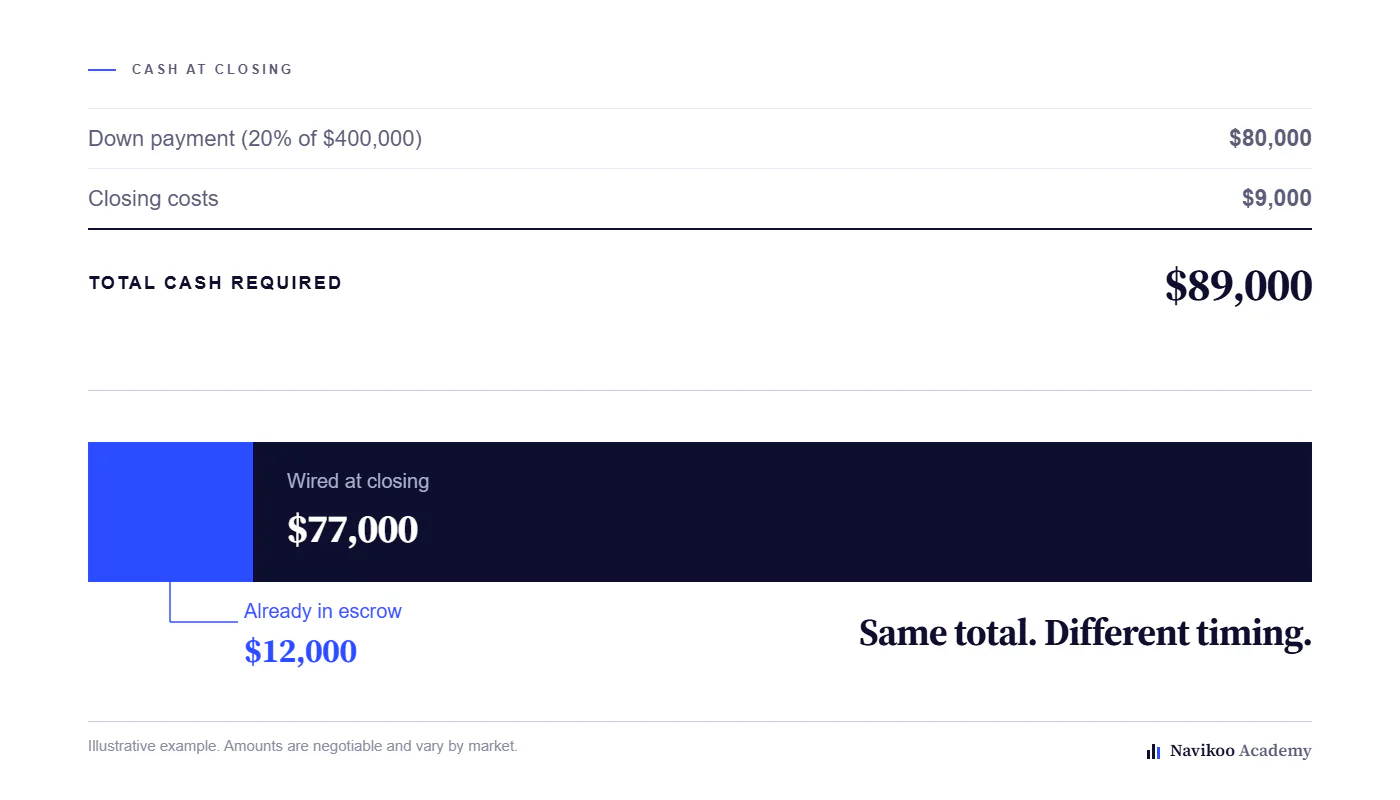
Consider a $400,000 purchase with:
$12,000 of earnest money already deposited
a 20% down payment
$9,000 of closing costs
A 20% down payment equals:
$400,000 × 20% = $80,000
Add $9,000 of closing costs:
$80,000 + $9,000 = $89,000
If the buyer already deposited $12,000:
$89,000 − $12,000 = $77,000
The buyer would therefore need approximately $77,000 of additional cash at closing, assuming no other credits or adjustments.
The total cost does not change.
Only the timing of when part of that money leaves the buyer's account changes.
Is Earnest Money Refundable?
Earnest money may be refundable when the buyer terminates under a valid contractual right and follows the agreement's notice and timing requirements.
The specific contract controls.
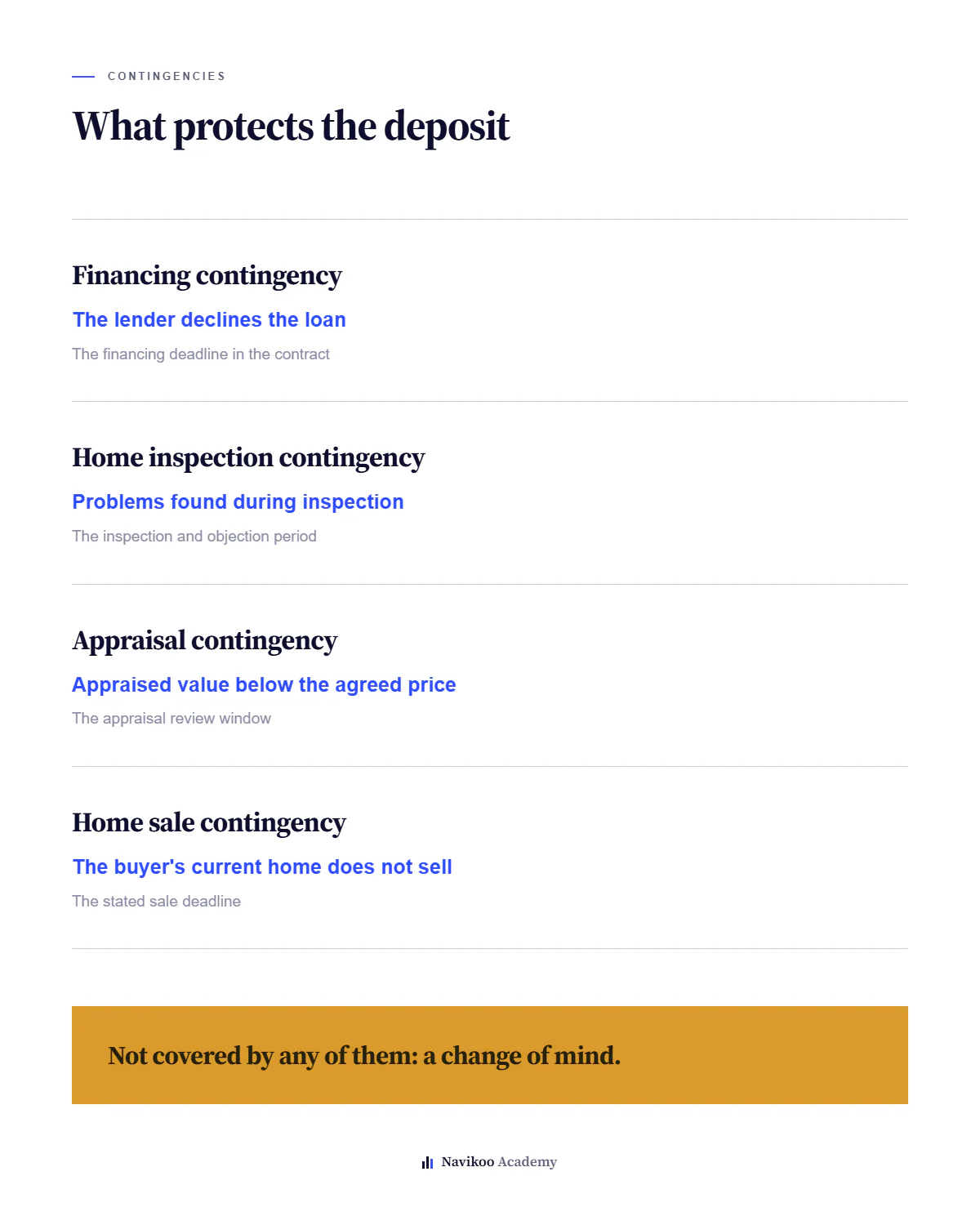
Contingencies are among the most common protections because they give the buyer defined circumstances under which the transaction may be terminated.
Financing Contingency
A financing contingency may protect the buyer if the required loan cannot be obtained within the contract's stated conditions and timeline.
The protection is not automatic simply because a lender declines the loan.
The buyer may need to:
apply for financing promptly
cooperate with the lender
satisfy contract requirements
give written notice before a deadline
provide documentation if required
If those conditions are met, the buyer may be entitled to terminate and recover the deposit under the financing contingency.
Home Inspection Contingency
An inspection contingency gives the buyer a defined period to inspect the property and respond to the findings.
Depending on the contract, the buyer may be able to:
accept the property
request repairs
request a credit
renegotiate
terminate within the inspection period
The exact rights vary significantly by contract form and jurisdiction.
The deadline matters as much as the inspection itself.
Appraisal Contingency
An appraisal contingency can protect the buyer when the property appraises below the agreed purchase price.
A low appraisal does not necessarily end the deal.
The buyer and seller may:
renegotiate the price
split the appraisal gap
allow the buyer to contribute more cash
terminate if the contract permits it
Whether the earnest money remains refundable depends on the contingency language and whether the buyer follows the required procedure.
Home Sale Contingency
A home sale contingency makes the purchase dependent on the buyer selling another property.
Sellers may view this as additional uncertainty because the transaction now depends on another sale being completed.
The terms can vary widely, including deadlines and provisions allowing the seller to continue marketing the property.
How Buyers Actually Lose Earnest Money
Several common mistakes can put the deposit at risk.
Missing deadlines.
Inspection, financing, appraisal, and other contingency rights usually expire on specific dates. A buyer can have a legitimate concern and still lose a contractual protection by failing to act on time.
Waiving contingencies.
Buyers sometimes waive inspection, appraisal, financing, or other protections to make an offer more competitive. That can materially increase the amount of risk attached to the earnest money deposit.
Terminating without a contractual right.
Changing one's mind, finding another property, or deciding the market has changed does not necessarily create a right to cancel. A buyer who defaults outside the contract's termination provisions may expose the earnest money to a seller claim.
Failing to follow notice procedures.
A contract may require written notice in a particular form or by a particular deadline. Informally telling an agent that the buyer wants out may not be enough.
For that reason, buyers should track both the contingency itself and the procedure required to exercise it.
Who Keeps Earnest Money if a Deal Falls Through?
The answer depends on the contract, the reason the transaction failed, and applicable state law.
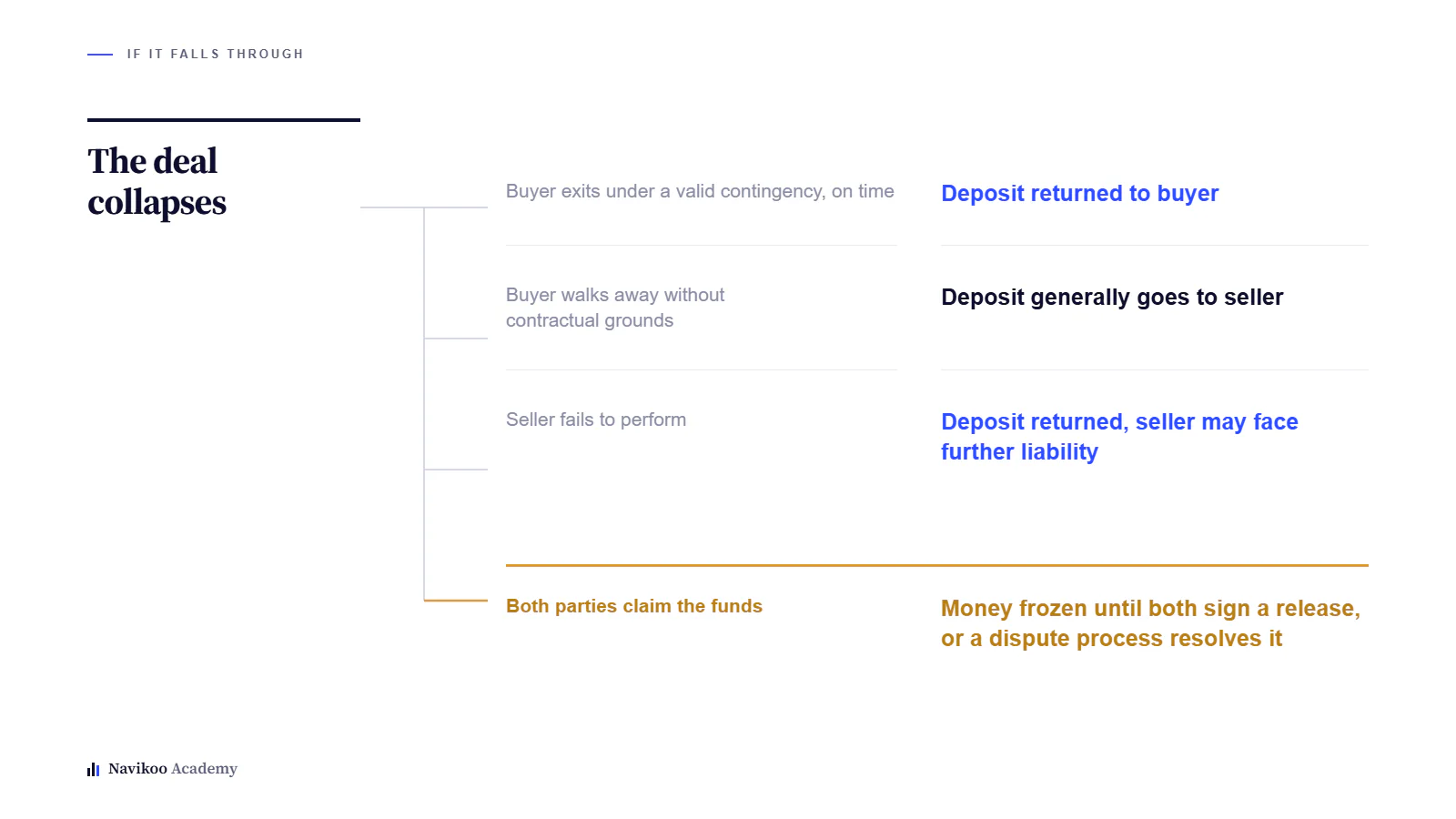
A buyer who properly terminates under a contractual contingency may be entitled to receive the deposit back.
A buyer who defaults without a contractual right to terminate may put the deposit at risk, subject to the remedies and release procedures in the agreement.
If the seller fails to perform, the buyer may be entitled to a return of the deposit and potentially other remedies, depending on the contract and jurisdiction.
When Both Sides Claim the Money
A dispute becomes more complicated when both buyer and seller claim the deposit.
The escrow holder generally must follow the release procedure required by the purchase agreement and applicable law.
The funds may remain in escrow until:
both parties sign a release
mediation resolves the dispute
arbitration resolves it
a court determines entitlement
another contractually required process is completed
The exact procedure varies by state and contract.
For the buyer, this creates a second type of risk beyond losing the deposit: the money may remain unavailable while the dispute is resolved.
That can matter if the buyer intends to pursue another property and needs the same cash for the next transaction.
Earnest Money as a Priced Option
For investors, it can be useful to think about earnest money and contingencies as two parts of the same offer-risk structure.
Contingencies define the circumstances under which the buyer may terminate.
Earnest money determines how much transaction capital is tied up and potentially exposed if the buyer defaults or exits outside those protections.
Consider two hypothetical offers.
Offer A
$20,000 earnest money
inspection contingency
financing contingency
appraisal contingency
Offer B
$12,000 earnest money
inspection waived
appraisal protection waived
Offer A puts more cash into escrow.
Offer B puts less cash into escrow but may expose that deposit to a wider range of problems because the buyer has fewer contractual exit rights.
That is why the headline deposit amount should not be analyzed alone.
A stronger offer can be created by increasing earnest money, reducing contingencies, shortening contingency periods, or combining those changes.
Each choice transfers a different type of risk to the buyer.
The Capital an Offer Locks Up
Earnest money is also a liquidity decision.
During the transaction, deposited funds are generally unavailable for other purchases or expenses.
For a buyer purchasing one home, that may simply affect cash planning.
For an investor pursuing several deals, it can become a portfolio constraint.
Suppose an investor has three properties under contract at $400,000 each and deposits 2% on every transaction.
Each deposit is:
$400,000 × 2% = $8,000
Across three transactions:
$8,000 × 3 = $24,000
That $24,000 cannot simultaneously fund:
another earnest money deposit
repairs on an existing property
lender reserves
closing costs
an emergency capital expense
The risk becomes larger when several transactions overlap.
An active investor should therefore size earnest money against total available liquidity rather than looking only at what might make one offer more competitive.
Protecting Earnest Money from Wire Fraud
Real estate transactions are attractive targets for wire fraud because large amounts of money move quickly between parties who may communicate primarily by email.
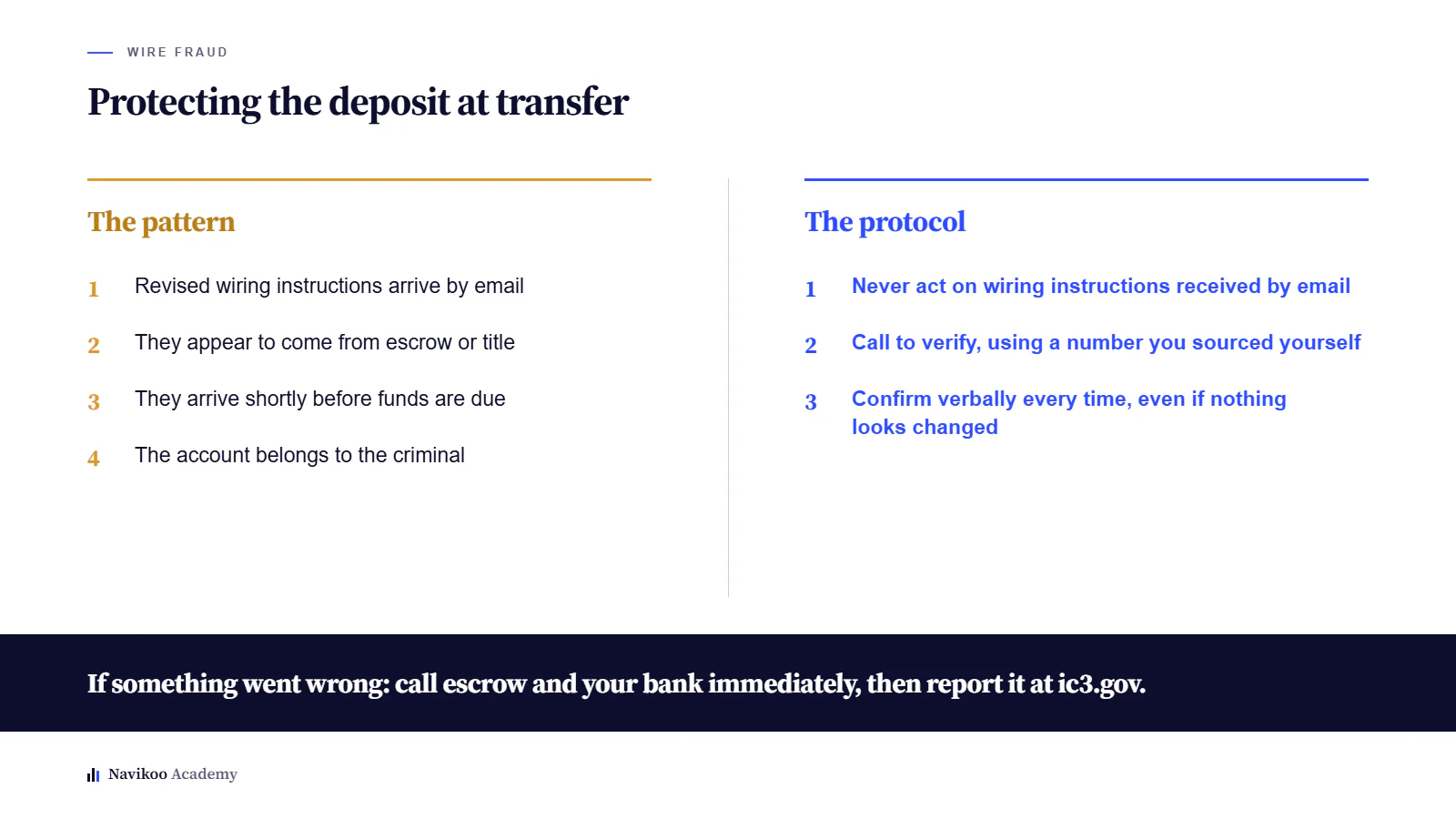
A common scheme involves fraudulent wiring instructions that appear to come from the title company, escrow agent, attorney, lender, or another trusted party.
The safest practice is to verify wiring instructions independently before sending funds.
Use a phone number obtained from a trusted source rather than relying on contact information contained in the email providing the instructions.
Before sending money:
confirm the recipient
confirm the bank name
confirm the account information
verify any last-minute changes
question unexpected urgency
A change in wiring instructions shortly before closing should receive additional scrutiny.
How Do I Report Suspected Fraud?
If a fraudulent transfer may have occurred, contact the bank and the legitimate escrow or title company immediately.
Banks may have procedures for attempting to stop or recall a transfer, particularly when the problem is identified quickly.
Suspected internet-enabled real estate fraud can also be reported to the FBI's Internet Crime Complaint Center at IC3.gov.
The buyer should also notify the lender, real estate agent, attorney, or other professionals involved in the transaction so the rest of the parties can verify whether additional accounts or communications were compromised.
Fast reporting can improve the chance of recovery, although recovery is never guaranteed.
Key Takeaways Before You Sign
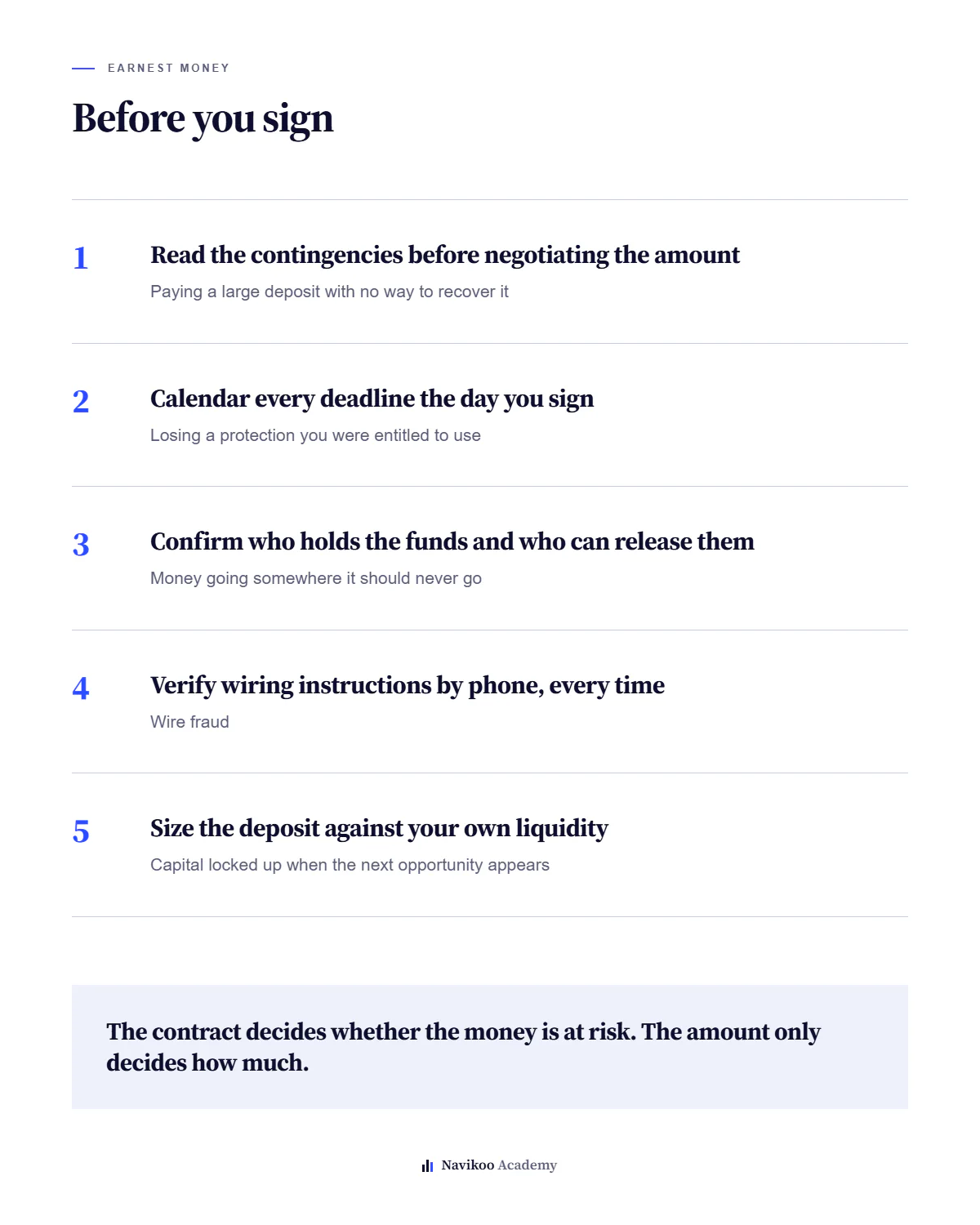
Start with the contract.
Before deciding how large the earnest money deposit should be, identify:
the deposit deadline
where the money will be held
the inspection deadline
the financing deadline
the appraisal provisions
any other termination rights
the procedure for requesting a refund
Calendar those dates immediately.
A contingency provides little protection if the buyer misses the deadline or fails to give notice in the required way.
Verify the escrow instructions independently before sending money, particularly when wiring funds.
For investors, include liquidity in the decision as well.
A larger deposit can strengthen an offer, but it also removes cash from circulation while the property remains under contract. Several simultaneous transactions can tie up more capital than expected.
Investors who want to evaluate deposit timing alongside down payments, financing, reserves, and closing costs can model those cash requirements in Navikoo's analysis tools before committing funds across multiple transactions.
Earnest money is easiest to manage when the buyer understands the contract before increasing the deposit. Know when the money is refundable, know what deadlines preserve those rights, and make sure the amount committed does not create a cash problem elsewhere.